

It Girls.
"'It girls' are the women we can’t look away from.” — Matthew Schneier, NY Magazine

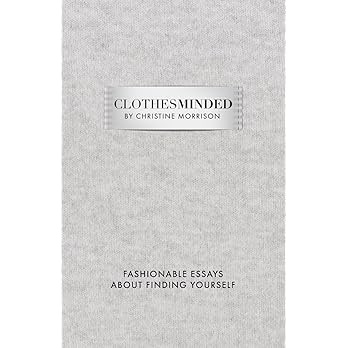
The term “It girl” was coined by British novelist and screenwriter Elinor Glyn, who defined it — ahem, “It” — as an irresistible, magnetic quality. But it wasn’t until thirteen years later, in 1927, when silent film star Clara Bow starred in Glyn’s movie It, that the first “It girl” was popularized. Decades later, the phenomenon landed stateside. I was delighted to capture some of these early aughts moments in New York City in my newly released fashion essay collection, Clothes Minded:
“While Y2K caused a global frenzy at the turn of the century, New York City was equally buzzing for a different phenomenon: the ‘It girl.’ Despite the absence of social media, these chic creatures were well-known by name and occupation (see the Vogue masthead). In September of 2000, Vanity Fair released an ‘It girl’ list featuring heiresses — Samantha Boardman, Aerin Lauder and Kidada Jones among them — who loved to party and shop with unabandoned ferocity. The fashion world, especially in New York, took note. Park Avenue, renowned for its luxury real estate, housed many of these swans, as the line between ‘It girls’ and socialites blurred as effortlessly as that between art and fashion. As the vice president of marketing at Calvin Klein overseeing ready-to-wear and beauty, I devoured Vogue writer Plum Sykes’ thinly veiled tome about these society sweethearts, Bergdorf Blondes. The book was a fabulous read that mirrored life uptown. Or, in my case, Super Saturday.”
The era didn’t feel historic while it was happening. There were no cell phones or social media feeds to archive every move; visibility was earned, not recorded. Writing about it for the book pulled me back into that texture — Park Avenue apartments humming with blonde ambition, downtown nights fueled by interns and heiresses alike and a city unselfconscious enough to proclaim the new archetype.
While it may seem the “It girl” disappeared as influencers took over, they are still among us. The modern “It girl” doesn’t debut on a Vanity Fair list, she emerges through subtler channels — beauty drops, niche biographies, reality-TV resurrections, even here in Substack; micro-moments that register as a cultural shift before they become a global headline. Just two years ago, New York Magazine celebrated the heritage of “It girls” in a “where are they now?” retrospective. And fashion media from Vogue to Who What Wear notes the rise of a new generation of “It girls” that “transcends the traditional rules of celebrity: they are authentic and relatable, embracing personal expression.” Harper’s Bazaar India agrees — while acknowledging that being an “It girl” remains a balancing act between capturing the zeitgeist and recognizing its fleeting nature.
THE LATEST IT GIRLS:
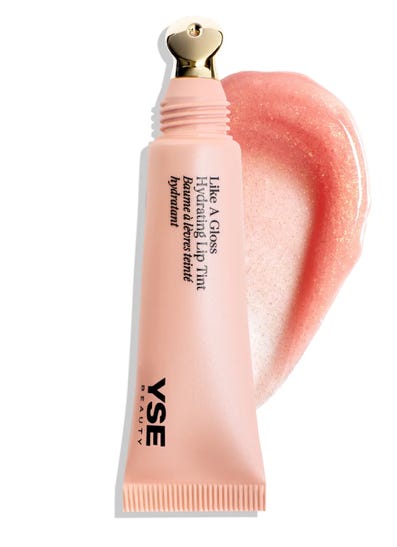
YSE Beauty’s It Girl Hydrating Lip Tint
Before even introducing the “It Girl” shade (a shimmering peachy-pink) this month, Molly Sims’ YSE Like A Gloss felt aptly named for who we strive to be in life. Its shine isn’t the sticky, nightlife-aftertaste of the aughts; it’s cleaner, quieter, purposeful without trying too hard. Much like today’s “It girls” — not the paparazzi chasers of the past — women of all ages who are seen because of who they are, not what they represent.
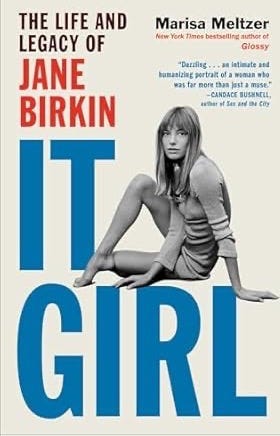
IT GIRL: The Life and Legacy of Jane Birkin
Author Marisa Meltzer (of Glossy brilliance) does it again with this definitive tome on the ultimate “It girl.” Birkin was the model for an It girl who never intended to be one; she simply refused to perform and became irresistible. Her influence on style goes far beyond the term, and this book beautifully captures her legacy — she is so much more than her bags and bangs.
Rachel Zoe’s Return to Bravo
Talk about coming full circle. Rachel Zoe shaped the aughts’ visual language more decisively than any list, or taste, maker. (Not to mention she put the styling profession on the map). As I recount in Clothes Minded, while working at Super Saturday — the annual Hamptons charity event the New York Times called the “Rolls Royce of Garage Sales”:
“Karan was milling around, along with Kelly Ripa, Molly Sims, Nicky Hilton, and Rachel Zoe — who’d begun duplicating her ’70s-inspired boho-waif look for ‘It girls’; her latest poster child was Nicole Richie.”
It wasn’t styling so much as aesthetic replication — an era defining itself through her eye. Her return to Bravo isn’t nostalgia; it’s recognition. A reminder of who developed the “It-girl” blueprint before algorithms turned it into a formula. She didn’t merely participate in the era’s “It girls”; she authored their silhouette.
AN ERA EVOLVES
Maybe the “It girl” never disappears; she just shifts mediums. Lip glosses, biographies, television — each a new surface catching an old light. The aughts were messier, but they were honest. We weren’t performing for a camera or the world. Today’s versions are tidier, more distributed and more self-aware. The power hasn’t shifted — only the format. And as we age, even our relationship to striving for “It” evolves. As I capture in the closing of the chapter in Clothes Minded:
“For me, that shift meant letting go of the idea of becoming an ‘It girl’ at all. As I aged, the striving fell away — replaced by something sturdier. Living with epilepsy, taking medication every day, navigating uncertainty, and still showing up with purpose and grit redefined what ‘It’ could mean. It may not resemble the version once celebrated by Vanity Fair, but in stepping away from the pursuit, I realized I had redefined it entirely — and, somewhere along the way, became one anyway.”
Loving all this nostalgia, Christine! And miss the old days of waiting for my magazine stack to arrive in the mail: Interview, Vogue, Elle and it goes on… was so much more satisfying and inspirational to pour thru a magazine and dream vs social media. Sigh.
Brings me back to my W Mag days when I worked on the It Girl Luncheon. We hosted during Globes in LA and NYFW in NY. Lots of talented women with their own style, influence and on the edge of big careers. so many of them were multi-hyphenates.